
Interreligious dialogue without minority religions or human rights organizations?
One-sided Debates of the Dialog Forum Religion and Integration around Interior Minister Herrmann (CSU) without Minority Churches Contradict Everything That is Desired

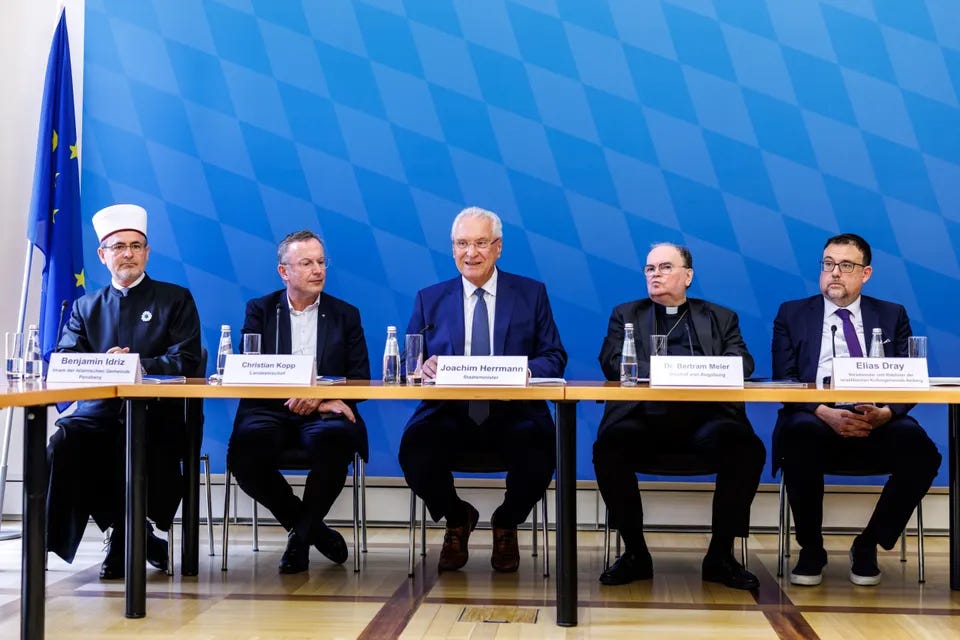
Picture Source: Matthias Balk / Bavarian Ministry of the Interior
The debate on religious diversity, freedom of belief, and the protection of civil rights in Germany is gaining momentum. However, a look at recent developments and the composition of the actors involved around Bavarian Interior Minister Herrmann (who currently wants to be active in the field of religious freedom) reveals a well-known, structural problem: The debate is being conducted without the participation of “sects” and minority churches outside the Abrahamic spectrum. Organizations like FOREF remain excluded anyway. This is an alarming signal for democratic politics. It endangers the constitutional mandate of state neutrality. This can no longer be called a dialogue.
The Principle of State Neutrality and Real Dialogue: Just a Empty Phrase?
The Basic Law requires strict neutrality from the state in matters of religion and belief. This neutrality is not measured by how intensively established major churches are involved, but by how fairly and unbiasedly the state treats minorities and their civil society advocates.
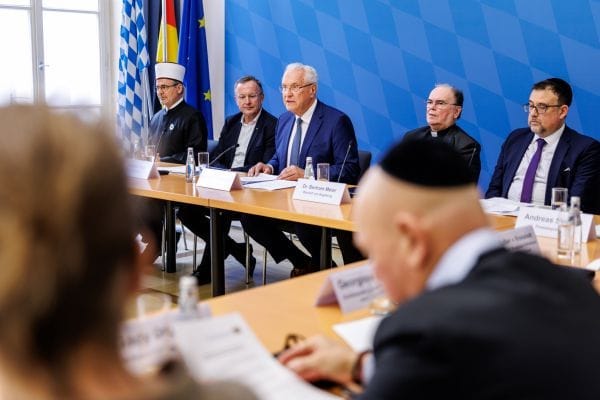
Picture Source: Matthias Balk / Bavarian Ministry of the Interior
When state or publicly funded bodies create forums to pass judgment on the rights, structure, or social role of minority religions without giving them a voice, the mandate of neutrality turns into a farce. An echo chamber of the majority society is created, in which people talk about those affected instead of with them. Are we then only allowed to talk to Christians, Jews, and Muslims? True dialogue requires a genuine diversity of opinion. Why not invite Scientology as well?
During the talks, all participants agreed on the outstanding importance of interreligious dialogue for our democracy and social cohesion, and agreed to document this together publicly.
Exactly: Only the participants agreed.
The Dialog Forum offers representatives of religious communities, universities, institutions of interreligious dialogue, as well as administration and politics a meeting platform that enables communication at eye level and in which an honest and constructive dialogue is cultivated. Interreligious dialogue makes an important contribution to peaceful coexistence in our increasingly diverse society. “Because religious tolerance, mutual understanding, respect, and open, constructive communication are fundamental prerequisites for a harmonious and successful coexistence in our country, for which the religious communities in our country hold great significance,” Herrmann explained.
Then everyone must be given the opportunity to participate.
Why the Exclusion of Human Rights Organizations Like FOREF Weakens the Debate
As the Forum for Religious Freedom Europe (FOREF), we have been campaigning for years for the respect of human rights based on data, solid legal foundations, and independence. Our perspective is characterized by two essential factors:
True Neutrality: We are not committed to any specific dogmas, but to the protection of universal human rights (Art. 9 ECHR / Art. 4 Basic Law).
Practical Expertise: Through our work at the intersection of law, psychology, and religious studies, we see the real impact of stigmatization and exclusion – particularly in administrative and court proceedings.
Through our work, we can also speak for those who are not heard. Conducting a debate without NGOs like FOREF means doing without an independent monitoring body. It creates the impression that critical, human rights-based objections are unwelcome in political discourse.
Is the Joint Declaration Really the Great Success It’s Claimed to Be?
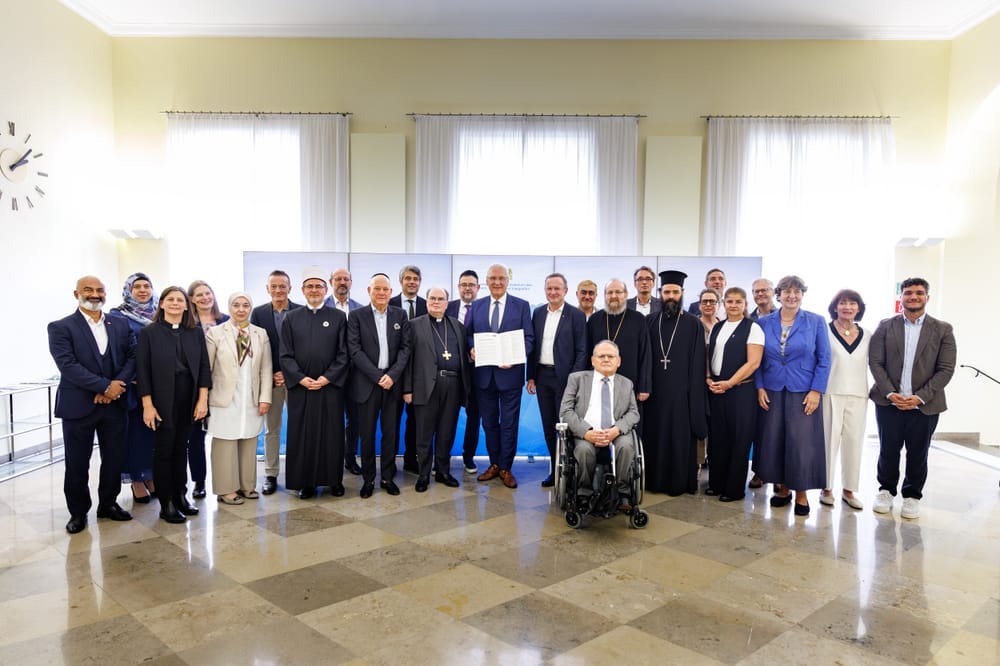
Picture Source: Matthias Balk / Bavarian Ministry of the Interior
My favorite passage:
We declare our readiness to remain in constructive exchange for this goal, even in difficult times and with controversial positions. We want to work towards ensuring that people listen to each other across the boundaries of religions, speak to one another with appreciation, and respect different perspectives as well as religious and cultural traditions. We want to create spaces for constructive encounters in which we impart knowledge and learn from each other.
If that’s the case, you should have invited Universal Life, Go & Change, the Twelve Tribes, Scientology, the Jehovah’s Witnesses, Shincheonji, or the Unification Church—or do you not appreciate them?
Conclusion: A Round Table at Eye Level is Needed
An honest, democratic discourse thrives on pluralism. We urgently call on those responsible to rethink the existing structures of participation.
If the initiative “Dialog Forum Religion and Integration” is to possess legitimacy:
Independent human rights organizations (NGOs) like FOREF must be accredited as advisors and observers.
Representatives of religious minorities must be heard directly or through FOREF or HRWF in order to dismantle prejudices and find objective solutions instead of symbolic, political stigmatization.
Freedom of religion and belief is indivisible. Anyone who wants to protect it must not start by excluding those on the fringes.
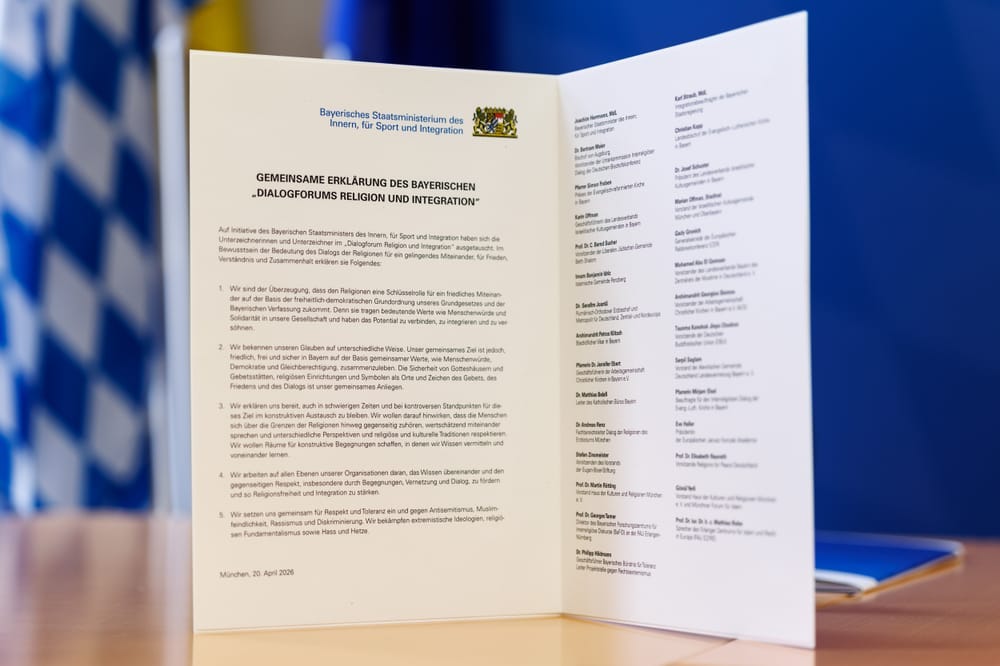
Picture Source: Matthias Balk / Bavarian Ministry of the Interior